The employer benefit built for every stage of maternity — and every woman the system has failed.
The story behind MaternityLink — and the founder who lived the gap it was built to close.
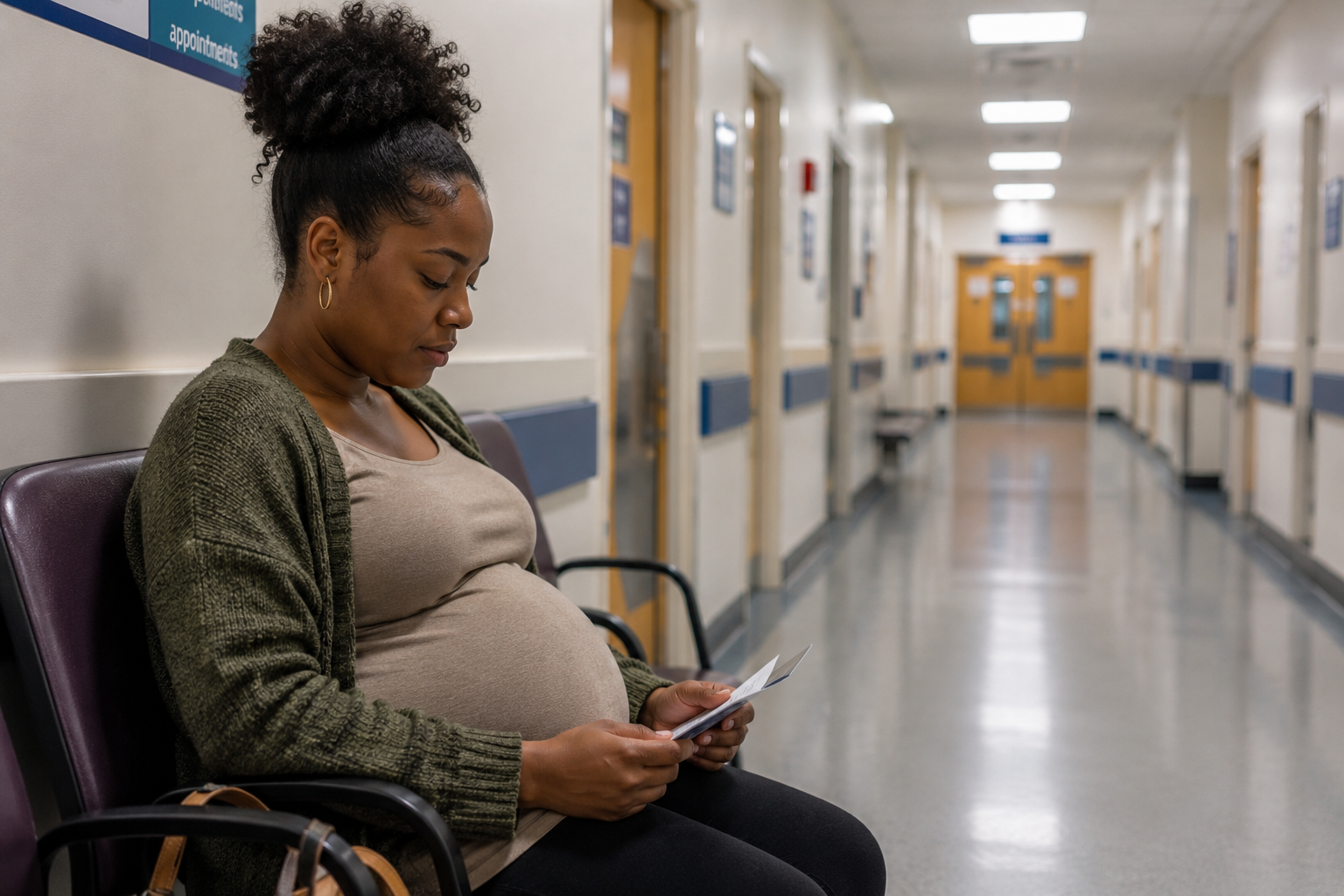
Why MaternityLink exists
MaternityLink exists at the intersection of two failures — in healthcare and in the workplace. Clinical records do not follow women across providers. Accommodation requests are negotiated informally. Returns are undocumented. And Black and minority ethnic women face all of this with the additional burden of documented systemic bias in the very care system meant to protect them.
MaternityLink is the infrastructure that should already exist. It is being built now — as an employer benefit that works today, with NHS integration coming in Phase 2.

The Founder's Personal Journey
During my second pregnancy, I was in temporary accommodation. Every time I moved — and I moved often — my maternity care reset. New midwife. New hospital. New GP. Every time, I had to explain everything from the beginning.
Then I developed high blood pressure. I went into triage four or five times. Each time, I had to repeat my full story from scratch. Each time, my previous concerns hadn’t been registered. Different doctors gave me different medications because nobody had the complete picture.
When I was finally discharged, the information I received was vague. Just take it. That was it. At my six week appointment, my GP had no idea any of it had happened. No discharge notes. No record of the admissions or the medications. I had to tell her myself.I am a clinical scientist. I had the language, the knowledge, and the confidence to advocate for myself. And it still wasn’t enough.At one point I reported reduced fetal movement and was almost not seen. That moment clarified everything. Not just the fragmentation problem — but what it means when the system doesn’t know who you are or what you have already been through.I think about the women who don’t have that. The ones whose concerns are dismissed because they aren’t documented. The ones who become the statistics we cite in reports and forget about until the next inquiry. Black women in the UK are nearly three times more likely to die in childbirth (MBRRACE-UK, 2024).That number has not meaningfully changed in decades. Behind it is a system that repeatedly fails to know who a woman is, what she has been through, and what she has already raised as a concern.MaternityLink exists because I lived the gap. This is not a startup story. This is a survival story. And I am building the infrastructure so that no woman has to tell it again.
Priscilla Addai
Clinical Sciences Graduate | BSc First Class, University of Bradford | Medical Student, Lancaster University | Barclays Black Founders Accelerator 2026 | Author, The Diary of an African Girl with PCOS (in print)
What sets us apart
MaternityLink is not a wellbeing platform, an EAP, or a coaching service. It is the only employer benefit platform that generates compliance documentation from a woman’s maternity health journey — and does so without her clinical data ever crossing to the employer. The controlled membrane is the differentiator. Every competitor either supports the woman clinically or manages HR processes. No competitor does both — and none offer dedicated features for Black and minority ethnic women. MaternityLink does all three.